
Everything is AI (Featuring Cats)
Using cats to learn about the different types of AI

Everything is AI
I was scrolling through LinkedIn a few days ago when I came across a diagram that caught my attention. You’ve probably seen similar ones: colorful pyramids, arrows pointing everywhere, and a whole lot of buzzwords stacked on top of each other.
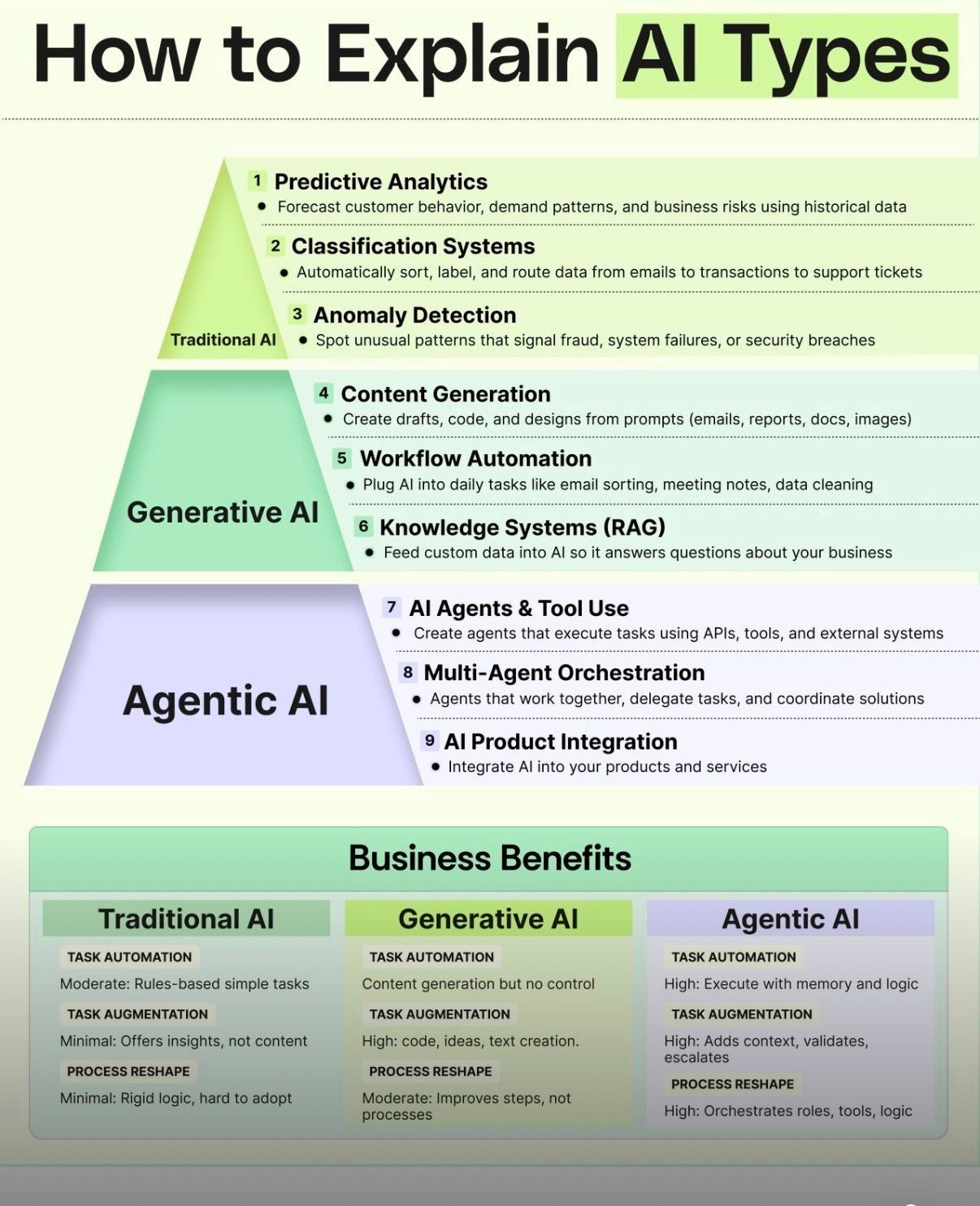
What does this even mean??? It says a lot but for many of us it doesn’t actually say much. If you’re a developer or just someone who’s trying to keep up with tech, looking at this can feel like trying to drink from a firehose. We have “Predictive Analytics,” “RAG,” “Orchestration,” and “Process Reshape.” It’s overwhelming. It makes you want to close LinkedIn, open up Instagram, and start doom-scrolling funny reels (this may or may not be personally true for me).
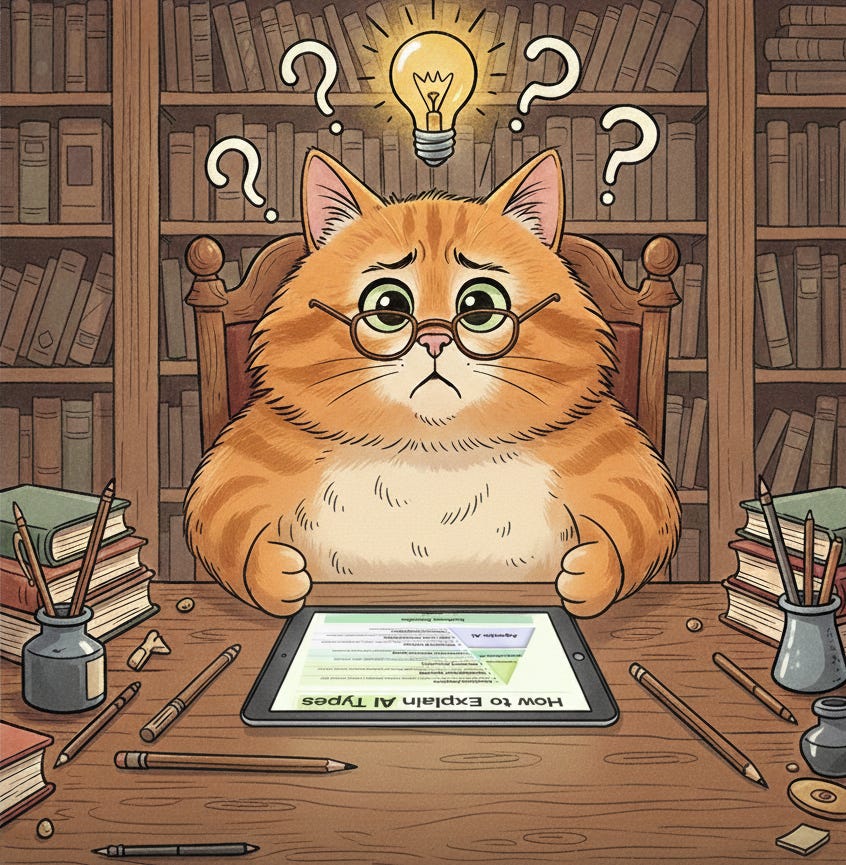
There actually is something useful buried in the details of the diagram. It just needs someone to translate it into something a little more approachable. I’ll do my best to create clarity around these very important concepts. And because this is the internet, I’m going to explain the future of computing using the only constant we have left: Cats.
The “Before Times” vs. Now
Before ChatGPT launched and changed the trajectory of every startup pitch deck, things were relatively simple. We didn’t really say “AI” that much. We usually called it Machine Learning. It was a powerful tool used to solve discrete, specific computing problems. We built classifiers (is this email spam?), recommendation engines (you bought a hammer, do you want nails?), and computer vision models (what kind of objects are in this image?) among other things.
Then, Large Language Models (LLMs) became mainstream. Suddenly, we had general-purpose models that could solve many different kinds of problems, not just the ones they were specifically trained for. “AI” became a description for everything without any credence being given to what kind of AI it is. It became increasingly hard to differentiate since marketing jargon took over.
So, let’s look at the three layers of the pyramid again, but this time, we are going to ignore all the details. We’ll stick with the high level concepts and use cats to understand them.
Traditional AI
Is it a cat?
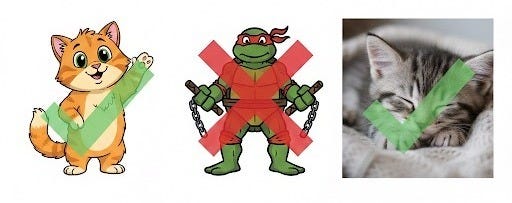
This is the foundation. Before we had chatbots that could write poetry, we had models designed to do one thing very well: observe patterns in past data to make predictions based on current data. Think of Traditional AI as a Detective with a magnifying glass. It’s not here to write a mystery novel; it’s here to analyze the evidence. It looks at the ‘fingerprints’ of the image: the curves, edges, and colors. Then it runs them against a massive database of known suspects (training data) to give you a match.
It doesn’t know how to write a story about a cat. It can’t draw a cat. It just outputs a probability score: 98% chance this is a cat.
Generative AI
Create an anime-style image of a cat coding on a computer

This is where the fun started in late 2022. While Traditional AI analyzes existing data, Generative AI creates new data. It isn’t just looking at pixels; it understands the relationship between concepts well enough to assemble them into something that didn’t exist before.
If I open up a model like Nano Banana Pro and type in that prompt, it doesn’t search Google Images for a match. It literally hallucinates the image pixel by pixel, predicting what a “coding anime cat” should look like based on everything it has learned.
Agentic AI
Set up a recurring delivery of Meow Mix for me
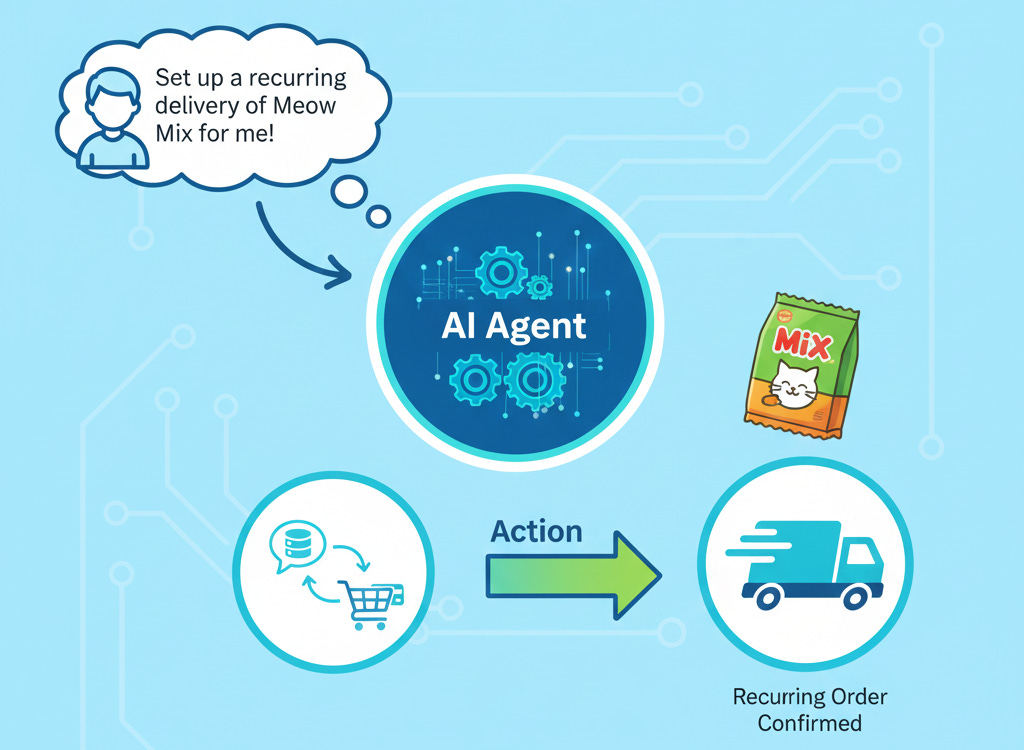
This is the top of that pyramid that has been developing rapidly. If Generative AI is a content creator, Agentic AI is an assistant with a credit card. The key difference here is Tool Use.
In the Generative phase, if I told a bot “I need cat food,” it might write me a nice list of nutritional requirements for felines. In the Agentic phase, the AI has access to external tools: APIs, web browsers, your calendar, etc. It doesn’t just generate text; it executes a workflow. It navigates to a shopping site, logs in, finds the Meow Mix, and schedules the order.
The Takeaway
When you see complex diagrams on LinkedIn, don’t get lost in the noise. Just simplify your understanding to these three buckets:
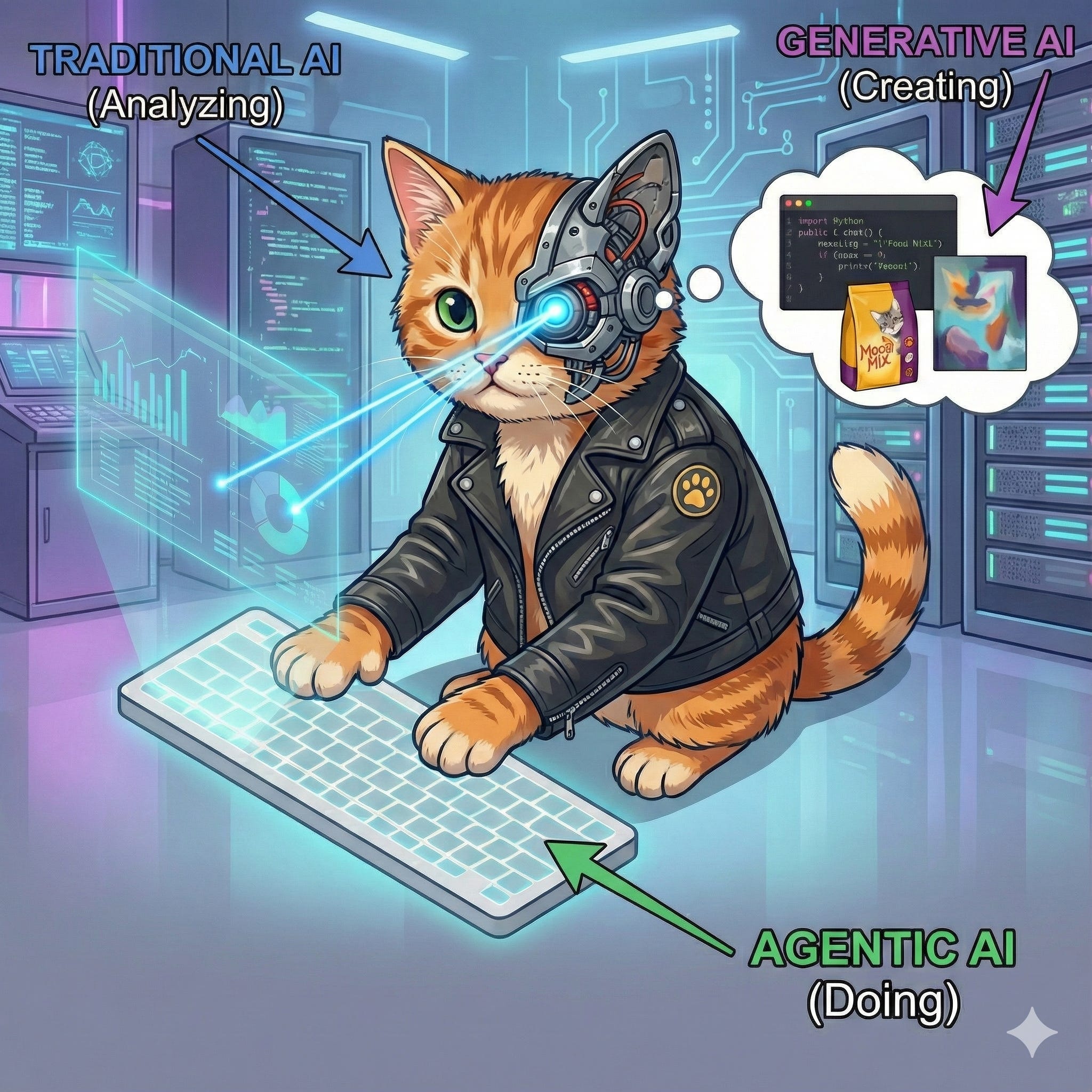
Traditional AI: Analyzing what happened to make guesses about what is happening or will happen (predictions & classification).
Generative AI: Creating new content (text, code, & images).
Agentic AI: Doing work (executing tasks & workflows).
Everything else is just implementation detail.
PS: A pyramid isn’t the best visual to describe how the three concepts relate to each other. Generative AI doesn’t build on the top of Agentic AI. Same goes for Agentic AI and Traditional AI. I think this works better…
As usual, feel free to DM here on Substack or reach out via LinkedIn if you want to chat about this some more.